Breastfeeding and Nutrition: What Your Body Needs More Of — and Why
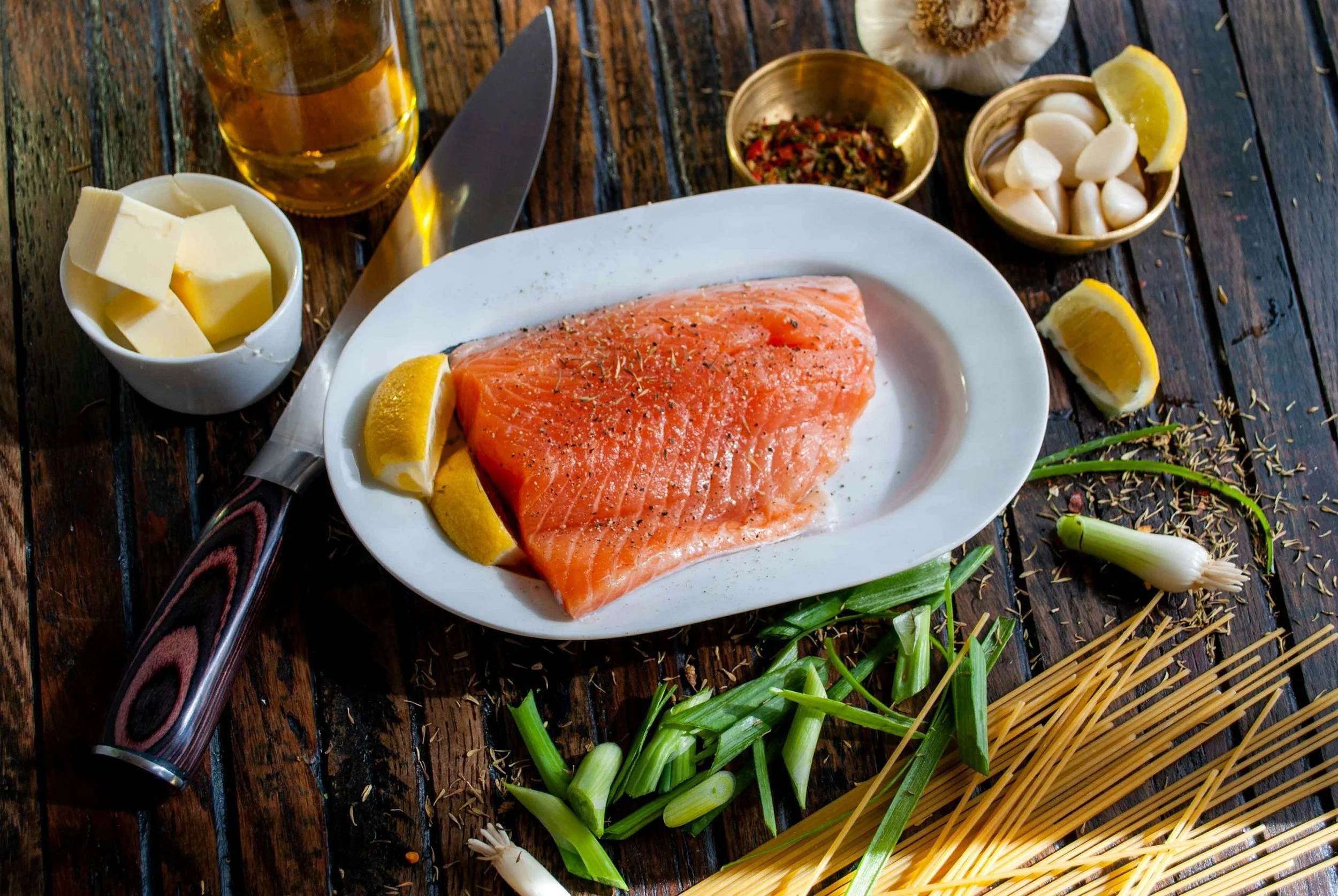
Dinne prep - salmon
Breastfeeding is one of the most nutritionally demanding things a human body can do. You are producing a complete food — one that changes composition feed by feed, day by day — while also recovering from pregnancy and birth. And yet the nutritional guidance most new mothers receive is vague, outdated, or focused on what to avoid rather than what to actively nourish.
Eating well in those early weeks is easier said than done, of course. That's something we understand deeply at Bubba & Me — and it's part of why we created Nourish at Home, our in-home nutrition service that comes to you, works with what you actually have in your kitchen, and builds a plan around your real life, not an imaginary one.
This article draws on current evidence to give you a clear, practical picture of what your body actually needs more of during breastfeeding, why each nutrient matters, and how to weave it into your days — with some simple recipes to make it easier on the days when cooking feels impossible.
Why Your Nutritional Needs Are Higher Right Now
Producing breast milk costs your body roughly 500 extra calories a day. But the calorie number is only part of the picture. Breast milk is nutritionally prioritised — meaning that if your diet falls short, your body will draw on its own stores to maintain milk quality. This protects your baby, but it can quietly deplete you over weeks and months if you're not replenishing well.
A 2019 systematic review published in the journal Nutrients found that micronutrient deficiencies — particularly iodine, vitamin D, and omega-3 DHA — are common in breastfeeding mothers in Western countries, often without obvious symptoms. You can feel fine, in other words, and still be running low.
The Nutrients That Matter Most
Iodine
Why you need more: Iodine is essential for your baby's brain development and thyroid function. Crucially, the iodine content of your breast milk is directly dependent on what you eat — your body doesn't store it well, so daily intake matters.
Target: Around 200–250 mcg per day.
Best sources: Dairy products (milk, yoghurt, cheese), eggs, white fish, and seafood. Seaweed is very high in iodine but can be inconsistent — occasional use is fine, daily large amounts are not recommended.
Worth noting: If you don't eat dairy or fish regularly, an iodine supplement or a postnatal multivitamin that includes iodine is worth considering. Please discuss with your healthcare provider or nutritional therapist beforehand.
Vitamin D
Why you need more: Breast milk is naturally low in vitamin D. This isn't a flaw — it's simply how human milk is designed, with the assumption that babies get sunlight exposure. In the UK, that assumption doesn't always hold. Maternal supplementation raises milk levels and supports infant bone health, immune function, and mood.
Target: The NHS recommends a minimum of 10 mcg (400 IU) daily for all breastfeeding women. Many practitioners now advise 25–50 mcg, particularly through autumn and winter.
Best sources: Oily fish, eggs, fortified foods — but food sources alone are rarely sufficient in the UK. A daily supplement is considered essential.
Omega-3 DHA
Why you need more: DHA (docosahexaenoic acid) is an omega-3 fatty acid that plays a central role in your baby's brain development and visual acuity during the first months of life. The amount transferred via breast milk depends directly on your dietary intake.
Target: 200–300 mg of DHA per day.
Best sources: Oily fish — salmon, sardines, mackerel, and trout are the most accessible. If you don't eat fish, algae-based omega-3 supplements provide DHA in the same form.
Choline
Why you need more: Choline is one of the most important and most overlooked nutrients in postnatal care. It supports infant brain development and memory formation, and breast milk is naturally rich in it — which means your own stores can deplete surprisingly quickly.
Target: Around 550 mg per day (significantly higher than general adult recommendations).
Best sources: Eggs are the most concentrated source (one large egg contains around 150 mg). Liver, meat, fish, and cruciferous vegetables like broccoli and Brussels sprouts also contribute meaningfully.
Vitamin B12
Why you need more: B12 is essential for your baby's nerve development and red blood cell production, and it passes into breast milk entirely from your diet or supplements — your body cannot make it. Deficiency in breastfed infants is rare but serious.
Target: 2.8 mcg per day.
Best sources: Meat, fish, dairy, and eggs. If you are vegetarian or vegan, a daily B12 supplement is not optional — it is essential.
Iron
Why you need more: Pregnancy and birth draw heavily on your iron stores, and many women arrive in the postnatal period already depleted. Low iron doesn't always look like classic anaemia — it often shows up as fatigue, low mood, brain fog, and reduced capacity to cope, all of which are easily attributed to "just having a newborn."
Target: Around 8–10 mg per day (less than during pregnancy, as menstruation has typically stopped).
Best sources: Red meat, dark leafy greens, lentils, beans, and fortified cereals. Always pair plant-based iron with vitamin C to significantly improve absorption — lemon juice on spinach, orange with your lentils.
Zinc
Why you need more: Zinc supports immune function, wound healing, and infant growth. Milk zinc levels decline over the first months of breastfeeding, which means your dietary intake becomes increasingly important.
Target: Around 13 mg per day.
Best sources: Red meat, shellfish (oysters are exceptionally high), pumpkin seeds, chickpeas, and cashews.
Calcium
Why you need more: If your dietary calcium is consistently low, your body will draw from your bones to maintain milk calcium levels. This is a normal physiological process, but it matters more if you're dairy-free or not eating widely.
Target: Around 1,250 mg per day.
Best sources: Dairy products, fortified plant milks (check the label — not all are fortified equally), sardines with bones, firm tofu made with calcium sulphate, almonds, and kale.
Protein
Why you need more: Your body is still repairing tissue from pregnancy and birth while simultaneously producing milk. Adequate protein supports all of this, as well as keeping your blood sugar stable and your energy more even across the day.
Target: Roughly 70–75g per day — around 25g more than standard adult recommendations.
Best sources: Meat, fish, eggs, full-fat Greek yoghurt, cottage cheese, lentils, beans, and nuts and seeds.
Folate
Why you need more: Folate supports cell repair and DNA synthesis, and continues to support your baby's development through breast milk.
Target: Around 500 mcg per day.
Best sources: Dark leafy greens (spinach, kale), lentils, beans, and fortified foods.
What About Calories?
Most breastfeeding mothers need an additional 400–500 kcal per day above their pre-pregnancy baseline. If you're exclusively breastfeeding and haven't yet returned to regular physical activity, this is not the time to be restricting — your milk supply and your energy levels genuinely depend on adequate fuel.
The quality of those extra calories matters as much as the quantity. Nutrient-dense additions — a handful of nuts, an extra portion of oily fish, eggs on wholegrain toast — will serve you far better than calorie-dense but nutritionally empty snacks.
Hydration: The Thing Nobody Talks About Enough
Breast milk is approximately 87% water. Producing it increases your daily fluid needs significantly — most lactation experts recommend aiming for 2–3 litres per day, including fluids from food.
A practical approach: drink a large glass of water every time you sit down to feed. Many mothers feel spontaneously thirsty during a feed — this is a normal physiological response. Listen to it.
Signs of mild dehydration to watch for: dark or concentrated urine, headaches, fatigue beyond the usual newborn exhaustion, and reduced milk supply.
Supplements Worth Considering
Even with a varied, nutrient-rich diet, certain supplements are broadly recommended during breastfeeding:
Vitamin D — 10 mcg (400 IU) is the NHS minimum; many practitioners advise 25–50 mcg. This is recommended for all breastfeeding women in the UK regardless of diet.
Iodine — if you don't eat dairy and fish regularly.
Omega-3 DHA — particularly if you're not eating oily fish 1–2 times per week. Algae-based DHA is available for those avoiding fish.
Vitamin B12 — essential if you are vegan or vegetarian.
A postnatal multivitamin — many prenatal vitamins can be continued postnatally, or look for one formulated specifically for the postnatal period.
Always check labels: some combined supplements contain vitamin A as retinol, which should be limited to no more than 1,500 mcg RAE daily from all sources combined.
A Few Things to Be Mindful Of
The list of foods to truly avoid while breastfeeding is much shorter than in pregnancy. A few things worth being aware of:
Caffeine passes into breast milk in small amounts. Up to 200mg per day (roughly 2 cups of coffee) is generally considered safe, but some babies are more sensitive. If your baby seems particularly unsettled or wakeful, try reducing caffeine for a few days to see whether it makes a difference.
Alcohol does enter breast milk. If you drink, waiting 2–3 hours per unit before feeding allows levels to clear. Expressing and discarding is not necessary if you wait.
High-mercury fish — shark, swordfish, and marlin should be limited to one portion per week. Canned tuna to no more than four medium cans per week. Same guidance as in pregnancy.
No food needs to be eliminated unless your baby shows a clear, consistent reaction. Maternal dairy exclusion is sometimes suggested for colic or reflux, but the evidence is mixed — always speak to your GP or a dietitian before cutting out major food groups.
How to Organise Your Eating: A Practical Guide
Think in building blocks, not recipes
Forget complex cooking in the early weeks. Instead, think in components that can be quickly assembled:
A protein source at every meal — eggs, chicken, salmon, lentils, Greek yoghurt
One serving of vegetables or fruit — frozen counts completely
A slow-release carbohydrate — oats, wholegrain toast, sweet potato, brown rice
A healthy fat — avocado, olive oil, nuts, oily fish
Meals that freeze particularly well and are especially supportive postnatally: dahl, lentil soup, chicken and vegetable stew, shakshuka base, fish pie (freeze before the final bake).
A sample day of eating
This is an example only — adjust to your own hunger and appetite, which may vary significantly day to day.
Breakfast: Overnight oats — rolled oats, whole milk or fortified oat milk, chia seeds, banana, almond butter. Prepare the night before.
Mid-morning: Two hard-boiled eggs with oatcakes and a small handful of pumpkin seeds.
Lunch: Sardines on wholegrain toast with rocket, cherry tomatoes, olive oil, and lemon.
Afternoon: Full-fat Greek yoghurt with berries and a drizzle of honey.
Dinner: Salmon fillet with sweet potato and steamed broccoli, or a quick red lentil dahl with basmati rice.
Evening: A small bowl of mixed nuts and dried fruit, or warm milk with a pinch of turmeric.
Three Simple Recipes
Lactation Energy Balls
These are not magic — but they are genuinely nourishing. Oats provide slow-release energy and fibre, flaxseed adds omega-3s, and nut butter contributes protein and healthy fat. A batch lasts a week in the fridge.
Makes approximately 20–24 balls
200g rolled oats
3 tbsp ground flaxseed
3 tbsp chia seeds
120g almond or peanut butter
3–4 tbsp honey or maple syrup
50g dark chocolate chips (optional)
1–2 tbsp milk to bind if needed
Mix all ingredients together in a large bowl. Refrigerate for 30 minutes until firm enough to handle. Roll into balls roughly the size of a large marble. Store in the fridge for up to 7 days.
15-Minute Salmon and Spinach Pasta
Rich in DHA, B12, iron, and choline. One pan, minimal washing up.
Serves 2
2 portions of pasta (wholegrain if possible)
2 salmon fillets
2 large handfuls of spinach
2 eggs
50g Parmesan, grated
1 garlic clove, crushed
Olive oil, lemon zest, salt and black pepper
Cook the pasta. While it cooks, pan-fry the salmon in olive oil — about 4 minutes per side — then flake into pieces. Whisk eggs with Parmesan and lemon zest in a bowl. Drain pasta, keeping a cup of pasta water. Off the heat, add the egg mixture, salmon, spinach, and garlic to the pasta and toss quickly, adding splashes of pasta water to create a silky sauce. Season well.
Iron-Rich Red Lentil Dahl
One of the most nourishing, inexpensive, and freezer-friendly meals you can make. Pair the iron in the lentils with the vitamin C from the lemon juice to maximise absorption.
Serves 4–6 (or batch for the freezer)
400g red lentils, rinsed
1 tin chopped tomatoes
1 tin coconut milk
1 large onion, diced
3 cloves garlic, crushed
1 tsp each: turmeric, cumin, garam masala
½ tsp chilli flakes
200g spinach
Juice of 1 lemon
Salt to taste
Soften the onion in oil for 5 minutes. Add garlic and spices, cook for another minute. Add lentils, tomatoes, coconut milk, and 400ml water. Simmer for 20–25 minutes until lentils are completely soft. Stir in spinach and lemon juice. Season. Serve with rice and a spoonful of full-fat yoghurt. Freezes well for up to 3 months.
When to Seek Support
It is worth speaking to your GP, midwife, or a registered nutritional therapist if:
You're feeling persistently exhausted, low in mood, or foggy beyond the normal adjustment period
Your milk supply is significantly low or decreasing
You are following a vegan, vegetarian, or otherwise restricted diet
You had significant blood loss during or after birth
Your baby has been diagnosed with a cow's milk protein allergy or other food sensitivity
A postnatal nutritional assessment can identify deficiencies before they become symptomatic. If you'd like support with your postnatal nutrition, our practitioners at Bubba & Me are here to help — get in touch to find out more.
A Final Word
Nourishing yourself well while feeding a new baby is genuinely hard. The logistics of cooking, the broken sleep, the competing demands — all of it works against eating thoughtfully. But small, consistent steps make a real difference. One more glass of water. A handful of nuts alongside your toast. A batch of energy balls in the fridge for 3am.
You grew a human. Now, with the right fuel, you're continuing to nourish them — and yourself. That matters enormously.
References
Dror, D.K. & Allen, L.H. (2018). Overview of Nutrients in Human Milk. Advances in Nutrition, 9(suppl_1), 278S–294S.
EFSA Panel on Dietetic Products, Nutrition and Allergies (2019). Dietary reference values for iodine. EFSA Journal, 12(5).
NHS (2023). Vitamins, supplements and nutrition in pregnancy. nhs.uk
Scientific Advisory Committee on Nutrition (2011). Dietary Reference Values for Energy. SACN.
World Health Organization (2009). Infant and young child feeding. WHO.